

The Real Space Race Isn't About Heroes, It's About Plumbing
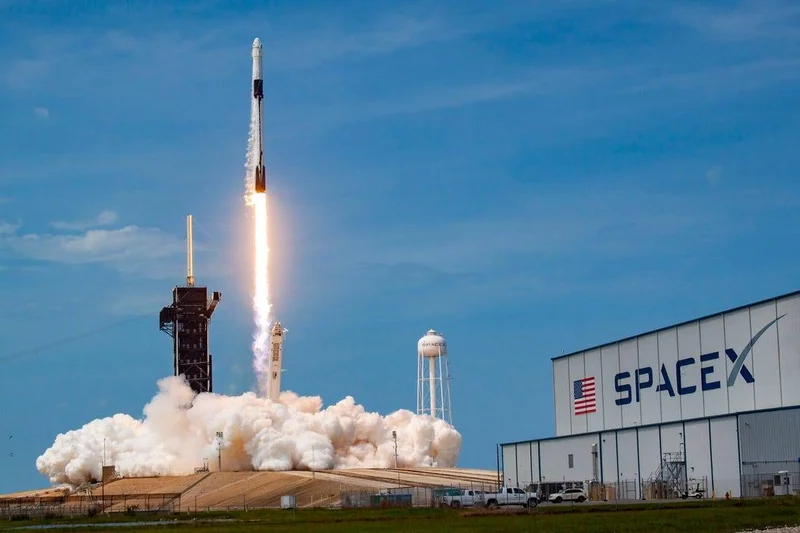
Another Falcon 9 rocket screamed into the night sky from Cape Canaveral last week. Yawn, right? Just another Starlink mission, 29 more broadband satellites dumped into low Earth orbit. Ho-hum. Most folks probably didn't even notice, too busy scrolling through some viral cat video or arguing about who's really running the country. But here's the kicker: that November 10th launch, the Starlink 6-87 mission, wasn't just another Tuesday night light show. It was Florida's 94th orbital launch of 2025, smashing the record set just last year. Ninety-four. Think about that for a second.
This isn't about the drama of a moon landing or the shiny promise of Mars. This is about the grinding, relentless, frankly boring consistency that's actually building our future in space. And that, my friends, is why it matters more than any last-minute rescue fantasy.
The Grinding Gears of Progress (and Bureaucracy)
Let's be real, the space industry thrives on hype. Everyone wants a hero, a daring mission, a nail-biting cliffhanger. But while the headlines scream about potential disasters, SpaceX is out there, day in and day out, making space travel as routine as a cross-country flight. Well, almost. That Starlink launch? It actually got pushed back because the FAA, bless their hearts, mandated commercial launches between 10 p.m. and 6 a.m. Why? Air traffic controller shortage during a government shutdown. You can't make this stuff up. We're building a multi-planetary civilization, and we're still tripping over our own feet with terrestrial bureaucracy. It's like trying to build a skyscraper but having to wait for the local zoning committee to decide if your blueprints match their preferred shade of beige.
SpaceX's Falcon 9 booster B1096, on its third flight, landed itself perfectly on 'Just Read the Instructions' out in the Atlantic. Third flight. Five hundred thirty-second booster landing to date. This ain't just impressive; it's foundational. It's the equivalent of a trucking company reusing its trucks for hundreds of thousands of miles instead of buying a brand new one for every delivery. That's how you get to 94 launches from one state in a year, with SpaceX accounting for a staggering 95% of 'em. We're talking about an "airport-like flight environment," according to the U.S. Space Force, and they're aiming for 100 launches annually. Sounds like a pipe dream, but when you look at the numbers, it's not so far-fetched. They've even got new payload facilities popping up, like Amazon's Kuiper satellite processing plant. This isn't just a space race; it's an industrial revolution in plain sight, and most people are completely missing it because it's not flashy enough.
The Siren Call of the Rescue Mission (and Why It's Bullshit)
Now, let's pivot to the shiny object that did grab everyone's attention: the Chinese Shenzhou-20 crew, stuck on Tiangong due to suspected space debris damage. Almost immediately, the internet exploded. "SpaceX to the rescue!" "Elon, go get 'em!" Give me a break. Remember earlier this year when former President Trump told Musk to "go get" the "abandoned" Starliner crew? And Musk, ever the showman, pledged he would? It's great for clicks, but let's be real, the actual possibility of a SpaceX Crew Dragon rescue for Shenzhou-20 is about as likely as me winning the lottery. Twice.
Why? For starters, the Chinese crew ain't in immediate danger. Secondly, SpaceX doesn't just have a fleet of Crew Dragons sitting around like Uber cars. They've got missions scheduled for next year – NASA Crew-12, Vast-1. Third, and this is a big one, those docking systems? Completely incompatible. Their EVA suits? Different. And then there's the elephant in the room: politics. The US and China don't exactly send each other Christmas cards. The idea that a US commercial company is just going to waltz up to a Chinese space station and play hero is pure Hollywood fantasy. It's much more probable that China will launch its own Shenzhou-22 as a replacement.
This whole episode, though, highlights something critical: the growing problem of space debris. It's a minefield out there, and it ain't getting any cleaner. So while everyone's clamoring for a heroic rescue, the real story is the quiet, consistent grind of companies like SpaceX building the infrastructure that makes space more accessible, more resilient, and maybe, just maybe, less prone to these kinds of situations in the first place. That 94th launch wasn't just a number; it was another brick in the road, another pipeline laid. We're building the interplanetary plumbing, one routine, record-breaking launch at a time. And offcourse, that's the part that truly deserves our attention.
We're Missing the Point, Aren't We?
It's easy to get caught up in the drama, the potential disasters, the calls for superheroics. But while we're all fixated on the shiny, tragic headline, the real work, the actual, tangible progress, is happening in the background. It's in the consistent rumble of a Falcon 9 booster, the repetitive splashdown on a drone ship, the sheer volume of satellites being deployed day after day. This isn't just about breaking records; it's about building the foundation for everything that comes next. And if we can't appreciate that, if we only care when something breaks, then maybe we don't deserve the future we're supposedly reaching for. We want the glorious space age, but we can't even be bothered to look up when the mundane, essential work is getting done.